

Prashnavachak News
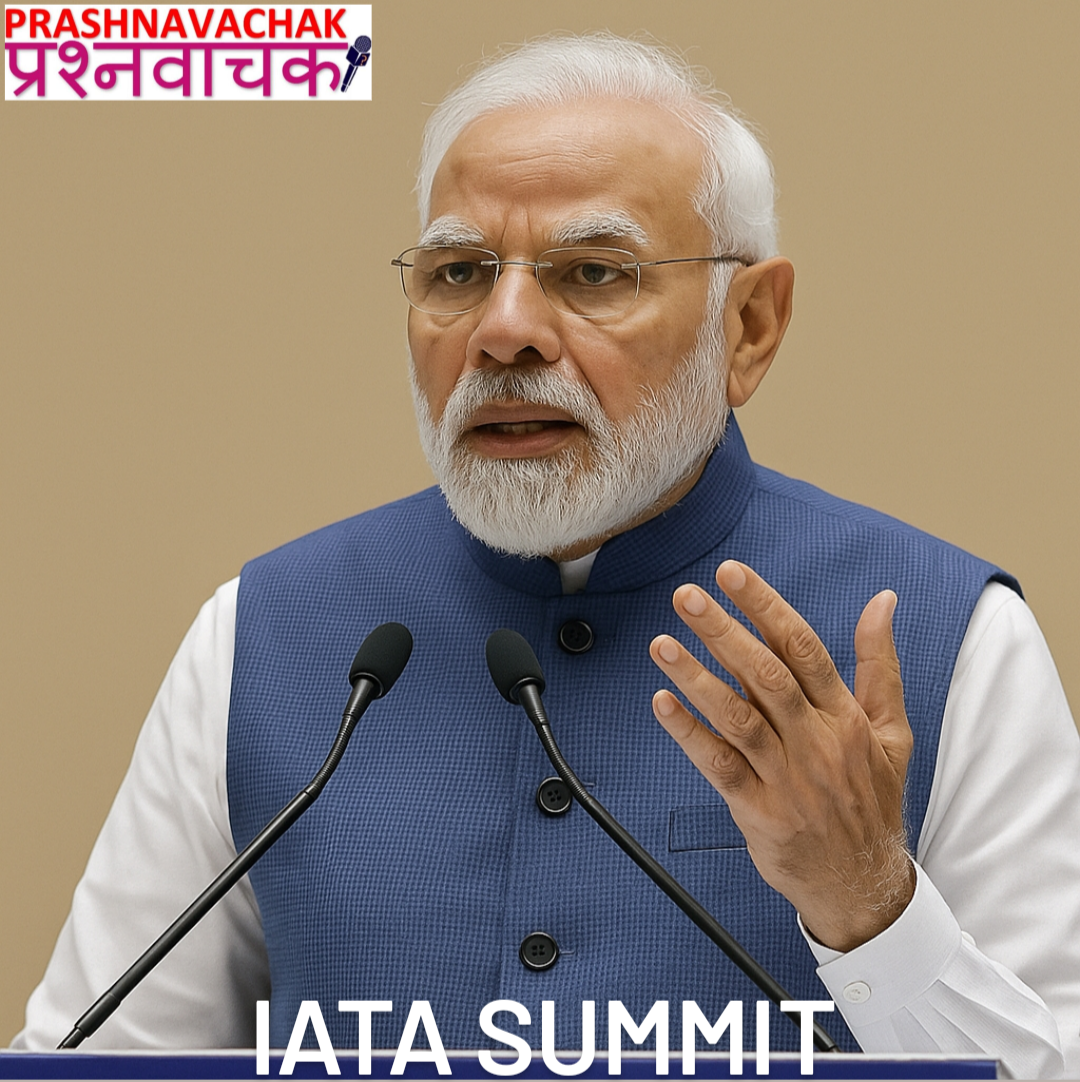
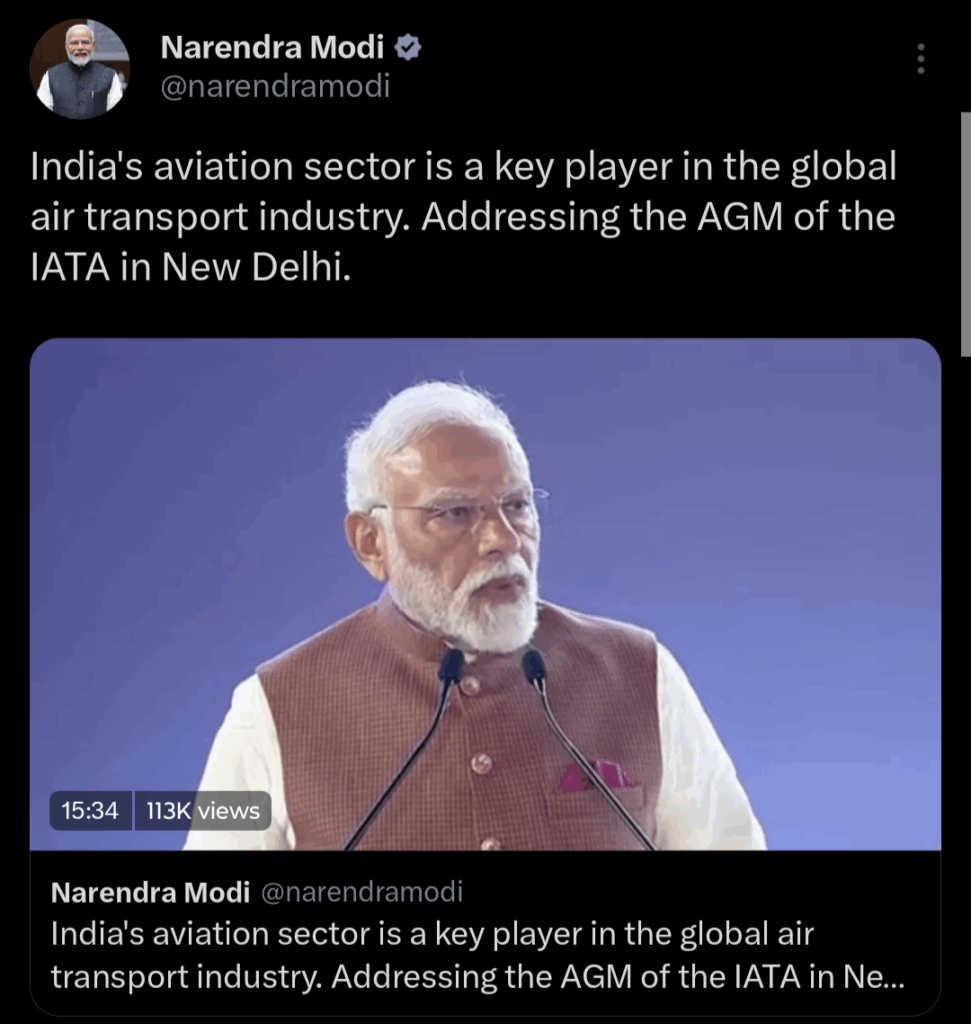
New Delhi – Prime Minister Narendra Modi addressed the 81st Annual General Meeting of the International Air Transport Association (IATA) and the World Air Transport Summit (WATS) at Bharat Mandapam, New Delhi, marking a historic return of the event to India after 42 years. Speaking before global aviation leaders, PM Modi highlighted India’s meteoric rise in the aviation sector and its growing influence in space-aviation integration, innovation, and sustainability. “Today’s India is not only a major market but a hub of policy innovation, inclusive development, and emerging technologies,” said the Prime Minister, emphasizing India’s transformation into the world’s third-largest domestic aviation market. He noted that India is becoming a global leader in the convergence of space and aviation, with ambitions extending beyond Earth. PM Modi outlined three key pillars fueling India’s aviation growth: a vast and aspirational consumer base, a robust demographic and talent pool driving innovation in AI, robotics, and clean energy, and a supportive, reform-driven policy ecosystem. He declared that India is now at a pivotal “take-off point” in civil aviation and is fully prepared to achieve unprecedented heights. One of the standout achievements discussed was the UDAN scheme, which has enabled over 15 million passengers—many for the first time—to access affordable air travel. India currently sees 240 million passengers fly annually, with this number expected to double to 500 million by 2030. Cargo volumes are also set to triple from 3.5 million to 10 million metric tons by decade’s end. The Prime Minister highlighted the expansion of airport infrastructure, with operational airports rising from 74 in 2014 to 162 today, and over 2,000 new aircraft on order by Indian carriers. He also underscored India’s leadership in green mobility, investments in sustainable aviation fuels, and digital innovation like Digi Yatra, a facial recognition-based, paperless travel solution that sets a new global benchmark for seamless airport experiences. On regulatory and industrial reforms, PM Modi pointed to the Protection of Interest in Aircraft Objects Bill, India’s alignment with the Cape Town Convention, and tax reforms at GIFT City, all aimed at attracting global aircraft leasing firms. He also referenced the newly passed Indian Aircraft Act, which aligns with international aviation norms and encourages easier compliance and investment. India’s Maintenance, Repair, and Overhaul (MRO) sector is rapidly growing, with facilities increasing from 96 in 2014 to 154 today. With 100% FDI, tax rationalization, and a $4 billion MRO hub goal by 2030, India is positioning itself as a global MRO powerhouse. PM Modi emphasized that India should be viewed not just as a market, but as a full-spectrum aviation value-chain partner—from design and development to manufacturing and innovation. He encouraged global aviation firms to embrace not only “Make in India” but also “Design in India.” He celebrated India’s inclusive aviation workforce, noting that over 15% of Indian pilots are women, triple the global average, with similarly high numbers of women in cabin crew and engineering roles. Drones, too, are playing a transformational role in financial and social inclusion, especially among women-led self-help groups. Reiterating India’s commitment to aviation safety, the Prime Minister praised the alignment of Indian regulations with ICAO global standards, highlighted recent audits, and reaffirmed support for Open Skies and global connectivity under the Chicago Convention. As the global aviation industry gathers in New Delhi from June 1–3, PM Modi’s address signals not just India’s aviation growth, but its readiness to lead the world in innovation, sustainability, and inclusive development in the skies and beyond.